When a rock suddenly strikes your windshield on the highway or a chip appears from everyday driving, it’s natural to feel stressed. However, understanding the fundamentals of auto glass damage and repair options can help you make informed decisions about your vehicle’s safety and maintenance. This guide explores the essential information every car owner should know about auto glass repair.
When Should You Repair vs. Replace?
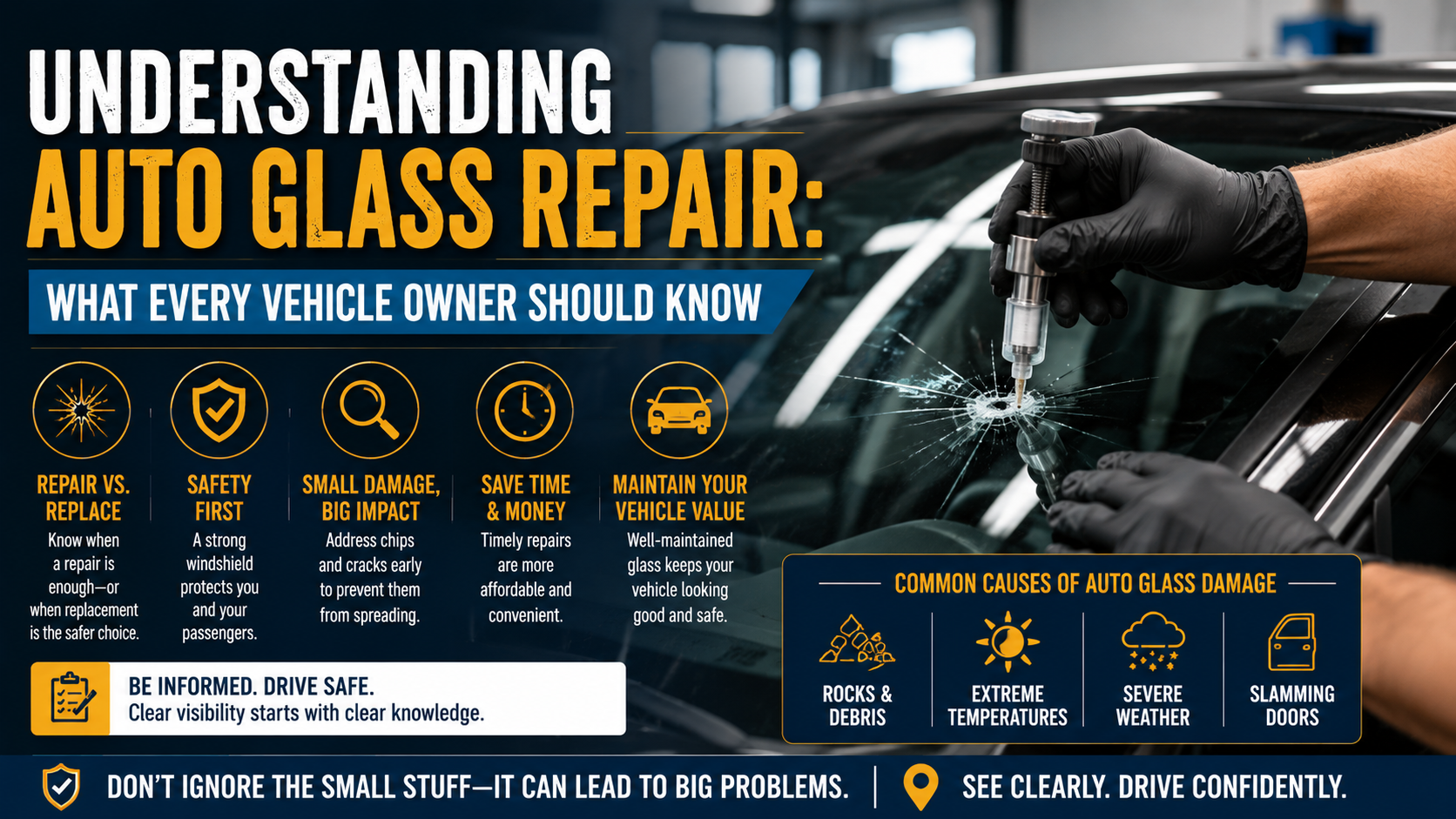
One of the most common questions vehicle owners ask is whether their damaged glass should be repaired or completely replaced. The answer depends on several key factors. Generally, chips smaller than a quarter and short cracks (under three inches) can often be repaired using specialized resin injection techniques. These repairs prevent the damage from spreading further and restore structural integrity.
However, larger cracks, damage directly in the driver’s line of sight, or breaks near the edge of the windshield typically require replacement rather than repair. This is crucial because your windshield is a structural safety component. It supports the vehicle’s roof structure and acts as a backstop for airbags during crashes. Cracks in these critical areas compromise the safety integrity of your vehicle.
How Auto Glass Damage Spreads
Understanding why prompt action matters is important. Small chips can rapidly expand into large cracks due to temperature fluctuations, road vibrations, and pressure changes. A minor chip that seems insignificant today could become a serious safety hazard within days or weeks. This is why auto glass professionals recommend addressing windshield damage as soon as possible early intervention often means you can choose repair rather than replacement.
Types of Auto Glass You Should Know About
Not all auto glass is created equally. There are three primary categories of automotive glass available: Original Equipment (OE) glass is the exact glass installed during vehicle manufacturing; Original Equipment Manufacturer (OEM) glass is from the same brand but without manufacturer logos; and Original Equipment Equivalent (OEE) glass provides comparable quality from alternative manufacturers. The difference matters because some vehicles have specialized features embedded in the windshield, such as rain sensors, heating elements, or driver-assistance system cameras. Using the correct glass type ensures these features continue functioning properly after repair or replacement.
ADAS Calibration: The Modern Windshield Factor
Modern vehicles often include Advanced Driver Assistance Systems (ADAS) that rely on cameras and sensors mounted near the windshield. These systems perform critical functions like lane departure warning, adaptive cruise control, and automatic braking. When replacing your windshield, especially on newer vehicles, proper ADAS calibration is essential. The system must be recalibrated after installation to ensure these safety features function accurately. Before choosing a service provider, verify whether they offer ADAS calibration capabilities.
Insurance Coverage Considerations
Most comprehensive auto insurance policies cover windshield repair or replacement, which can significantly reduce your out-of-pocket expenses. However, policies vary. Some policies include full coverage for repairs at no cost, while others require a deductible. Before filing a claim, compare your deductible amount with the repair cost sometimes paying out-of-pocket is more economical than filing a claim that might affect your rates.
After-Service Care Matters
Once your Auto Glass Repair Los Gatos or replacement is complete, proper aftercare ensures longevity. Repaired glass typically requires at least one hour of curing time before driving, as resin needs adequate time to set. For replacements, wait at least 24 hours before driving through a car wash, as the adhesive needs proper sealing. Avoid sudden temperature changes, such as blasting air conditioning immediately after replacement, and refrain from slamming doors forcefully. These precautions help ensure your repair sets correctly and lasts for years.